
Call anytime+234 810 159 9159
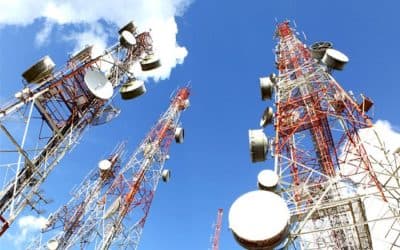
The Nigerian Communications Commission (NCC) is in charge of issuing telecommunication licenses in Nigeria. It is an offense to operate a communications system or facility or provide a communications service in Nigeria unless authorized to do so under a communications license or exempted under regulations made by the Commission under the Nigerian Communications Commission Act 2003.[i] Thus, it is imperative to obtain a license before engaging in any communications service in Nigeria.
What are the conditions for obtaining a telecommunication license in Nigeria?
What are the classes of licenses available in Nigeria?
The categories of telecommunication licenses available in Nigeria are:[iii]
There is also another type of license which is the Unified Licence; an authorization that allows the licensee to provide a basket of services under a single license. For example, under a Unified License, the licensee may be allowed to provide Mobile and Fixed telephony services, National Long Distance, and Gateway services under one license, it can also be Regional or National Services.[iv]
Also, there is the Value Added Licence which allows non‐core Network telecommunication services which are beyond standard voice calls. These services include Internet, Directory service, paging service, voice mail and Prepaid Calling Card service, Call Center services, content services, and Vehicle Tracking. The service provider does not own a network to provide the service and may ride on existing networks.
Read also: HOW TO ESTABLISH A DIGITAL BANK IN NIGERIA
Can a foreign company apply for a telecommunications license?
Yes, a foreign company can apply for a telecommunications license. However, the foreign company must be registered in Nigeria by the Corporate Affairs Commission (CAC) by virtue of section 78 of the Companies and Allied Matters Act (CAMA) 2020.
What is the time frame for granting a license?
According to the provision of the Nigerian Communication Act 2003, an applicant must receive a response with respect to a license application within 90 days of the submission of the application provided it is not the subject of a competitive bid process.[v] In practice, for individual licenses, depending on the service and completeness of required information, the conclusion of the process takes between 4‐8 weeks.
For a class license, the Nigeria Communications Commission shall decide within 30 days of receipt of the application, whether a class license shall be granted or refused, and the Commission shall notify the applicant in writing of its decision. [vi] The Commission also reserves the right to extend the time within which it shall decide on the application for a class license for an additional period not exceeding 30 days. [vii] However, it is possible to receive an Offer Letter immediately after the application is completed.
What are the processes involved after application?
Where the Commission is satisfied with the application, it shall issue an Offer Letter to the applicant, stipulating terms that are applicable to the license. The applicant shall pay the relevant license fee within 30 days of receipt of the Offer Letter.[viii]
The Commission may revalidate an Offer Letter that has expired upon a written request by the applicant stating reasons why it failed to pay the license fee within the stipulated timeframe. An Offer Letter may be revalidated only once and upon expiration of the period, the offer will lapse and the applicant shall be required to make a new application if he/she is still interested in obtaining a license.[ix]
Restrictions on Issuing Individual Licences
The Commission shall not issue an Individual license to any applicant who has;
Can a Licence be Assigned?
The grant of a license shall be personal to the licensee and the license shall not be operated by, assigned, sub-licensed or transferred to any other party unless the prior written approval of the Commission has been granted.[xii]
How Do You Apply for an Individual Licence?
a) Certificate of Incorporation
What are the Requirements for Obtaining a Class Licence?
Conclusion
To provide any telecommunication service in Nigeria, it is important to obtain a license from the Nigerian Communications Communication. As stated in the article, the license to be provided depends on the services to be offered amongst other factors. Providing any telecommunication service without a valid license is an offense for which the person shall be liable to an administrative fine of N5,000,000 for the contravention and N500,000 for each day that the contravention persists after an order to desist has been issued by the Commission.[xiii]
The legal procedure for obtaining a telecommunications license in Nigeria is a critical aspect of fostering a vibrant and competitive telecommunications sector. As Nigeria continues to advance its digital economy and expand connectivity to its population, the transparent and well-defined process of obtaining a telecommunications license ensures that operators comply with legal and regulatory requirements while fostering innovation, investment, and the delivery of high-quality telecommunication services to Nigerian consumers.
[i] Nigerian Communications Commission Act 2003; Section 31. See also Licensing Regulations 2019; Regulations 5
[ii] ibid; Regulations 10.
[iii]Nigerian Communications Commission Act 2003; Section 32.
[iv] Nigerian Communications Commission Website
[v] Nigerian Communications Commission Act 2003; Section 41.
[vi] Licensing Regulations 2019; Regulations 26(2).
[vii] ibid; Regulations 26 (4)
[viii] Licensing Regulations 2019; Regulations 17(2) & (3).
[ix] ibid; Regulations 17(4) & (5).
[x] ibid; Regulations 18.
[xi] Nigerian Communications Commission Act 2003; Section 39(3)
[xii] Nigerian Communications Commission Act 2003; Section 34.
[xiii] Licencing Regulations 2019; Regulations 13(1)
Written by Muhiz Adisa and Rodiyyah Bashir for The Trusted Advisors
Email us: info@trustedadvisorslaw.com