
Call anytime+234 810 159 9159
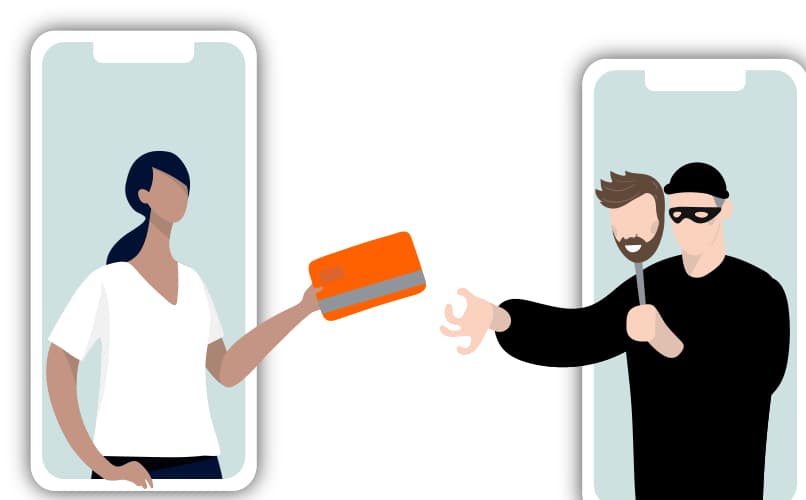
The internet seems to be the new place to find love for introverts who prefer to stay indoors and “press phone.” The reason for this is not far–fetched. Many of us are now glued to our gadgets, preferably whatever gives us access to the internet. Expectations are always to meet new people online and stay anonymous at least. Unfortunately for some, they end up being scammed online. In such instances, are there reliefs? What are the red flags? What should I do when I notice warning signs?
WHAT IS A ROMANCE SCAM?
A dating/ romance scam involves a male or female posing as a potential date or lover on the internet to connect with someone. The cons usually start with the creation of chemistry or a bond. This bond is generally nurtured into growth, leading to unwarranted solicitations for money and other items to settle some self-induced “emergency.” These demands typically come from requests for money via gift cards, cryptocurrency, prepaid debit cards, a bank, or a wire transfer. The scammers would usually promise to pay back but never do. Instead, the requests typically accumulate, and in the end, reality dawns, and the victim would have to cut the scammer off.
Romance scams usually overlap with other forms of fraudulent activities. For example, some people use dating sites to recruit unsuspecting wealthy persons to launder ill-gotten money through their accounts and even lure them into cryptocurrency investments which would usually be untrue.
HOW DO I KNOW THEY ARE A SCAMMER?
WHAT CAN I DO TO AVOID DATING SCAMS?
There are no hard and fast rules as to what can be done to avoid being a victim of dating scams, but preventive measures can be taken with utmost caution. This may save the day.
LEGAL RELIEFS
It is well established that fraud of any sort is criminal, likewise, Romance/ Dating scams. Unfortunately, no law in Nigeria specifically defines romance scams. However, it can be prosecuted under the purview of crimes or criminal offenses.
Some of the notable headings under which a romance scam may be addressed legally include:
“Any person who conspires with another by deceit or any fraudulent means to affect the market price of anything publicly sold, or to defraud the public or any person, whether a particular person or not, or to extort any property from any person, is guilty of a felony and is liable to imprisonment for seven years”[i]
“Any person who by any pretense, and with intent to defraud, obtains from any other person anything capable of being stolen, or induces any other person to deliver to any person anything capable of being stolen, is guilty of a felony and is liable to imprisonment for three years[ii].
“A person who fraudulently takes anything capable of being stolen or fraudulently converts to his own use or the use of another anything capable of being stolen is said to steal that thing”[iii]
“Any person who with intent to defraud sends electronic message materially misrepresents any fact or set of facts upon which reliance the recipient or another person is caused to suffer any damage or loss, commits an offence and shall be liable on conviction to imprisonment for a term of not less than 5 years and to a fine of not less than N 10,000,000.00 or to both fine and imprisonment”[iv]
“Any person who with intent to defraud, franks electronic messages, instructions, super scribes any electronic message and or instruction, commits an offence and shall be liable on conviction to imprisonment for a term of not more than 3 years or to a fine of not more than N5, 000,000.00 or to both such fine and imprisonment”[v]
CONCLUSION
Romance scams are prevalent in our society as the need to make quick money is on the rise. With the advent of plea bargaining, victims of romance scams have now been able to recover their funds under a plea-bargaining agreement. So watch out for the signs and play safe. Also, do not hesitate to speak up.
[i] Section 422 of the Criminal Code Act
[ii] Section 419 of the Criminal Code Act
[iii] Section 383 of the Criminal Code Act
[iv] Section 14(2) of the Cybercrime (Prohibition, Prevention, etc.) Act 2015
[v] Section 14(3) of the Cybercrime (Prohibition, Prevention, etc.) Act 2015
Written by Oluwafemi Faniyi for The Trusted Advisors
Email us: info@trustedadvisorslaw.com