Call anytime+234 810 159 9159
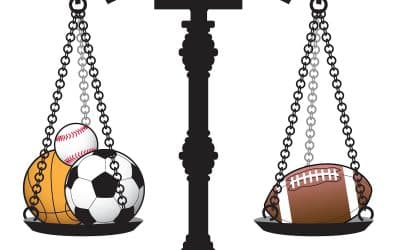
There has not been a consensus on whether the laws regulating sports be regarded as a sports law or the latter is the amalgamation of several laws. it is however safer to say Sports law is the application of all relevant laws to sports situations as the occasion demands. Sports law in Nigeria covers a wide range of legal issues related to contracts, sponsorships, and athlete rights and sport is regulated and governed by several laws and regulations part of which are; the Constitution of the Federal Republic of Nigeria 1999 (as amended), The National Sport Commission Act (formerly Decree No 34 of 1971), the Nigeria Football Association Act, National Institute for Sport Act and the Nigeria Boxing Board of Control Act.
In Nigeria, sports are regulated by various bodies, including the Ministry of Youth and Sports Development, the Nigeria Football Federation (NFF), and other sports-specific federations. Athletes and stakeholders should be aware of the rules and regulations set by these bodies.
This article will focus on contracts, sponsorships, and Athlete rights
CONTRACTS IN SPORTS:
A Sports Law Contract is a legal agreement, legally binding to the parties, which outlines the terms and conditions of their existing relationship thereby spelling out details regarding performance, confidentiality, compensation, and expectations of the parties.
Contracts in sports or sports law contract is a term used to describe the legal contractual issues at work in the sports industry. A standard contract in sports will have the flavor of entertainment law, contract, tort, criminal law, commercial law, intellectual property, labor law, and dispute resolution practice. As much as a sports contract has in it the elementary principles of contract, it goes deeper than just an ordinary contract and its wordings are to be carefully addressed to avoid potential conflict.
In a sports contract, there are essential elements that must exist for such to be valid.
Player Contracts: The legal aspects of athlete contracts and transfers are critical in ensuring fair treatment and protecting the interests of both athletes and clubs. This contract is often a limited duration employment, which spells out the terms and conditions of the athlete’s employment. Athletes in Nigeria typically sign contracts with sports clubs or teams. These contracts outline the terms and conditions of the athlete’s employment, including salary, contract duration, performance incentives, and bonuses, as well as the athlete’s injury status, rights in the event of termination, and any specific obligations.
Agency Contracts: Athletes often engage sports agents to represent their interests in contract negotiations. This is a contract that outlines the terms and conditions between a professional athlete and an agent. This is a legally binding agreement between both parties specifying obligations and services. It includes the agent’s commission, the agent’s duties, responsibilities, the extent of their representation, the duration of the agreement, as well as the athlete’s obligation to the agent, and any other relevant terms. These agent contracts should comply with Nigerian law
SPONSORSHIP:
Sponsorship according to Adams Lewis and Jonathan Taylor, is an investment in cash or kind in any activity, in return for access to the exploitable commercial and marketing benefits available from being associated with that activity.
Sports sponsorship is the financial support of a sport (be it an event, organization, or performer) by an outside entity (be it a person or an organization). It is a business arrangement whereby the sponsor (which could be any company) gives money to the sponsee (sports team, tournament, or athlete) in exchange for a specific set of rights. The sponsor essentially uses those rights to increase brand recognition, visibility, and customer loyalty, generating favorable public recognition (PR).
This is a legal agreement that governs the relationship between a team, league, athlete, or event organizer and a company/sponsor, in other to provide financial support or any other support for the sponsored party. A sponsorship contract may be in exchange for advertising or any other promotional benefits.
Sponsorship agreements should distinctly outline the management of ownership and utilization rights concerning brands, logos, imagery, and other intellectual property. Sponsors are expected to exercise caution to avoid infringing upon the Intellectual property rights of others
Formerly, athlete sponsorships tended to be side jobs and were regarded as avenues to make some extra money. This is not the situation in the modern era. For instance, Michael Jordan signed a five-year, $7 million contract with Nike in 1984 (Pat Benson, 2022). By doing so, he established a precedent for players to have a bigger say in the developing sports and streetwear industries
In sponsorship and endorsement deals, the following factors are imperative:
ATHLETE RIGHTS:
The rights of an athlete are cut across all spheres, ranging from sports contracts to endorsement, sponsorship, agency, and many more. We shall be looking at various rights available to an athlete.
DISPUTE RESOLUTION:
Sports disputes can arise from contract disagreements, disciplinary actions, or other issues. Nigeria may have specific dispute resolution mechanisms in place, including sports arbitration or mediation. The dispute resolution mechanism between both parties must be stipulated and not subject to national legislation and should be properly embedded in the athlete’s contract, stating that a dispute regarding an employment contract is to be summited to arbitration under member association statutes or to the Court of Arbitration for Sports (CAS). ADR mechanism can provide a more confidential and less formal setting for the resolution of disputes, this will enable parties to resolve their dispute in a less adversarial way
CONCLUSION:
Athletes, sports agents, and sponsors in Nigeria need to work with legal professionals who specialize in sports law to ensure that contracts, sponsorship agreements, and other legal matters are handled correctly and in compliance with Nigerian laws and regulations. Sports law can be complex, and seeking legal advice is essential to protect the interests of all parties involved.
Written by Ajibola Olaosebikan for The Trusted Advisors
Email us: info@trustedadvisorslaw.com
Telephone Number: +234 810 159 9159