
Call anytime+234 810 159 9159
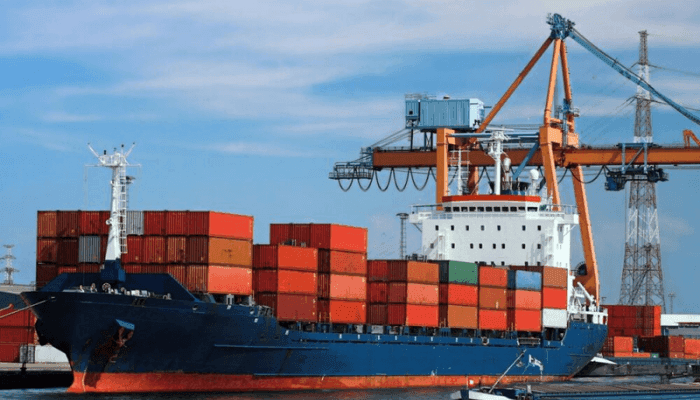
The arrest of a vessel is an effective remedy in admiralty practice. It allows a claimant to secure a claim by detaining the vessel (res) within jurisdiction, thereby preventing the other party from sailing away and rendering a subsequent judgment nugatory. Nigeria has a vast admiralty and maritime practice, which is governed by an array of Statutes and Rules of Court, the most notable ones being the Admiralty Jurisdiction Act (AJA)[1] and the Admiralty Jurisdiction Procedure Rules 2023 (AJPR 2023)[2]. It is equally important to note that the Federal High Court of Nigeria has exclusive jurisdiction to adjudicate admiralty matters.[3]
This appraisal examines the current procedure for the arrest of a ship in Nigeria, the legal challenges litigants, ship owners, and the court system encounter in trying to enforce this remedy, and proffers practical solutions to improve on the challenges identified
PROCEDURE FOR THE ARREST OF A VESSEL IN NIGERIA
The procedure for the arrest of a vessel in Nigeria is regulated by the Admiralty Jurisdiction Act (AJA), which defines the scope of admiralty jurisdiction[4], outlines the various maritime claims[5], and provides for remedies such as arrest, re-arrest, and damages for wrongful arrest.
The procedure is also regulated by the Admiralty Jurisdiction Procedure Rules 2023 (AJPR 2023); this primarily provides procedural rules on how to institute an action in rem. It provides guides for the issuance of a warrant of arrest, sale, caveats, custody, release, and even custody for needless/wrongful or malicious arrest.
The steps for the arrest of a vessel may vary based on urgency; however, the textbook format starts by identifying the cause of action that can give rise to a maritime claim. Here, the party ensures that the claim falls within the AJA’s categories of maritime claims, which are usually proprietary and general claims, which can be used to justify arrest.[6]
When a party shows that a claim is within the jurisdiction of the AJA, an admiralty action can be commenced by a writ of summons or (originating summons in limited circumstances), and this will be accompanied by pleadings and other supporting documents, such as an application for arrest of the vessel.[7]
At this stage, the claimant can apply for the issuance of an arrest warrant for the vessel. This application is usually made by way of motion ex parte, supported by an affidavit stating facts that establish the maritime claim, the presence or imminent presence of the vessel within the Nigerian jurisdiction, and proof that there is an impending removal or risk of departure of the vessel from within the jurisdiction.[8]
Upon careful and judicious consideration of the facts and the prayer sought, the court may grant or dismiss the prayer. If it is granted, the Admiralty registry via the Admiralty Marshal will take steps to serve the originating processes as well as the execution of the warrant of arrest. Upon arrest, the admiralty marshal is to take steps to preserve the vessel.
Once arrested, the vessel may be released if certain conditions are met, such as if bail conditions are met, a letter of undertaking or a bank guarantee is provided. During the pendency of the suit, the vessel may either be in custody or may be released to the ship owner on terms as may be directed by the court. Upon conclusion of the matter, Order 9 AJPR 2023 provides a detailed framework regulating the custody, sale, release from arrest, and deposits for the marshal’s expenses.
CHALLENGES CONFRONTING ARREST OF VESSELS IN NIGERIA
1.1 Jurisdictional Issues and Cause of Action of “maritime claim.”
Arrest of vessels has been challenged severally on the grounds that the elements culminating in the cause of action do not amount to a maritime claim as provided for under AJA, or that the party seeking to arrest the vessel has not met the statutory condition precedents needed to invoke admiralty jurisdiction.
As jurisdiction is the bedrock of any successful action in court, if faulted, the arrest will be nugatory, and in turn, the claimant would be exposed to the risk of wrongful arrest and a fine. This ultimately increases the time spent in court and results in an increased lack of confidence in the predictability of ship arrest outcomes.
1.2 Wrongful Arrests and Exposure/Damages
The economic activities generated by a sailing vessel are automatically brought to a halt; this can lead to huge financial losses in the instance of demurrage, port costs, and even reputational damage. It is for this reason that the laws make room for damages as a penalty for wrongful arrest, the AJA further lays down procedures for the compensation for needless arrest.[9]
A party with legitimate claims may be held back for fear of damages for being unable to sufficiently justify their claims; in the same vein, weak enforcement of penalties against wrongful and needless arrests can discourage ship owners and create a risk of increased transaction costs in Nigerian Shipping.
1.3 Arrest as security for Foreign Proceedings; Forum Tension[10]
Being very similar to the issues faced with jurisdiction, the AJPR 2023 recognition of arrest in aid of foreign proceedings or arbitration is commercially attractive; it can create forum management challenges, like;
i. What level of proof would be required by the Federal High Court about the foreign claim?
ii. How can the court ensure that Nigeria is not used for tactical arrests with weak merits?
iii. What scope of security will be acceptable relative to the foreign claim?
If standards are not clearly set out, it poses a twofold problem, in that Nigeria may become very strict in a way that undermines the essence of the reform, or it may run a risk of being too lax, which in turn increases abuse and wrongful arrest litigation.
CONCLUSION AND RECOMMENDATIONS
The framework regulating wrongful arrest risk should be improved. Undertakings as to damages should be made more practical; there should be clear disclosure of material facts, and conversely, there should be strict penalties for non-disclosure. Also, when detention is prolonged, there should be a prompt inter-party review. This will help ensure arrests are made on genuine claims and in good faith.
Standards for the arrest in aid of foreign proceedings and arbitration should be developed. The AJPR 2023 already permits the arrest in aid of foreign proceedings/arbitration, the Federal High Court should establish a guiding framework, through the typical practice directions and case law on prima facie proof of the foreign claim, disclosure of duties, as well as the conditions for maintaining arrest pending foreign outcomes. This safeguards the dignity of the Nigerian Admiralty space by ensuring it remains economically viable without becoming a forum for speculative arrest.
[1] Section 1-5 AJA
[2] Order 1 Rule 1 AJPR 2023
[3] Order 1 Rule 1(2) AJPR 2023, Section 7 (1) (d) Federal High Court Act
[4] Ibid 1
[5] Section 4 AJA
[6] Section 7 AJA
[7] Order 3 Rule 2 AJPR 2023
[8] Order 7 AJPR 2023
[9] Order 11 AJPR 2023
[10] Order 7 (8) AJPR 2023
Written by Obinna Okolie for The Trusted Advisors
Email us: info@trustedadvisorslaw.com
Telephone Number: +234 810 159 9159